A Holistic Pan-African Initiative for Global Empowerment
Our goal is to revolutionize the future of philanthropy through innovation, inclusion, and strategic investment in underserved communities. We believe giving should not only help — it should elevate.
Africa’s Sixth Region — A Vast Population Still Difficult to Measure
The African diaspora is rooted in a long history of global migration. Yet, despite its significance, there remains no single universally accepted definition of what constitutes a “diaspora.” The World Bank has identified more than 270 different definitions worldwide, reflecting diverse perspectives on identity, lineage, and connection to heritage.
While shared ancestry and cultural memory are common threads, interpretations vary — some recognize only first and second generations, while others trace lineage back six or seven generations or more, particularly in the case of descendants of the transatlantic slave trade. Another point of debate is whether active engagement with the ancestral homeland is required to be recognized as part of the diaspora.
The African Union (AU) refers to the African diaspora as the continent’s “sixth economic region.” It defines the diaspora as people of African origin living outside the continent who are willing to contribute to Africa’s development and to the advancement of the African Union. Beyond legal or political definitions, however, one of the most meaningful indicators of diaspora identity remains personal self-identification and a sense of belonging to Africa’s global community.
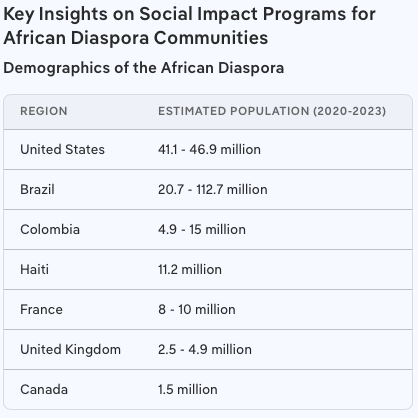
These insights highlight the significant role of the African diaspora in shaping social impact programs globally, emphasizing their contributions to economic growth, cultural exchange, and community development.
Map of African Diaspora Communities
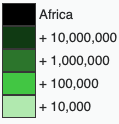
Across Africa, the US, Brazil, and the broader African diaspora, communities continue to experience the impact of historical oppression and economic disenfranchisement. These regions face a lack of financial inclusion, educational resources, youth empowerment programs, and limited opportunities for cross-border collaboration. Without addressing these systemic issues, progress toward lasting equity and economic independence remains elusive.
The International Quest for Truth and Justice (IQTJ) proposes a multi-pronged approach to solve these challenges, with an emphasis on education, capacity building, advocacy, economic development, and transnational collaboration. We will empower communities to confront historical injustices, equip youth with leadership skills, and facilitate a network of partnerships aimed at creating sustainable development.
Partners & Contributors