Pan-African Digital Sovereignty Series
Brazil · The Caribbean · Haiti
Readiness Campaigns, Sovereignty Pathways & Integrated Training Programs for African Diaspora Communities
Published by IQTJ | May 2026
Introduction: Digital Sovereignty as Liberation
Across the African diaspora, digital transformation is no longer a luxury, it is a frontier of sovereignty. From the favelas of Salvador to the hillsides of Port-au-Prince, from the cane fields of Barbados to the communities of Trinidad's East Dry River, millions of Pan-African people are standing at the threshold of a digital era that simultaneously holds the promise of liberation and the risk of deeper structural exclusion.
The International Quest for Truth & Justice (IQTJ) defines digital transformation not merely as the adoption of technology, but as the deliberate integration of digital tools into the architecture of collective coherence, the ability for communities to sustain themselves, govern themselves, educate themselves, and build wealth on their own terms. Through the lens of the Codex program, we understand distortion as any force, economic, cultural, or technological, that severs the connection between a people and their inherent capacity for self-determination.
This blog examines the current state of digital transformation in three key Pan-African diaspora regions: Brazil, the broader Caribbean, and Haiti. It assesses readiness campaigns and infrastructural efforts that specifically target African-descended communities, and it proposes a framework of integrated training and digital literacy programs designed to foster lasting sovereignty.
"Coherence before connectivity. The goal is not simply to be online, it is to be grounded, organized, and empowered through digital systems that serve our communities rather than extract from them." - IQTJ Codex Framework

Part I: Brazil - Afro-Brazilian Communities in the Digital Age
The Landscape
Brazil is home to the largest population of African-descended people outside the African continent, with over 56% of its 215 million citizens identifying as Black or mixed-race (pardo). Yet despite this demographic reality, Afro-Brazilian communities, concentrated in the Northeast region, in quilombo territories, and in the urban peripheries of Rio de Janeiro, São Paulo, and Salvador, remain the most digitally marginalized.
According to the Brazilian Internet Steering Committee (CGI.br), while overall internet penetration in Brazil exceeds 84%, access in quilombo communities and low-income Black neighborhoods often falls below 40%, constrained by infrastructure gaps, cost of data, and low levels of digital literacy. The digital divide in Brazil is inseparable from its racial divide, a legacy of slavery, colonialism, and centuries of deliberate underdevelopment.
Key Readiness Campaigns Targeting Afro-Brazilian Communities
Several national and community-led initiatives are working to bridge this gap:
1. Programa Computador para Todos (Computer for All)
Originally launched in 2005 and revived under different iterations, this federal program sought to subsidize hardware for low-income families, many of whom are Afro-Brazilian. While criticized for insufficient follow-through on training support, updated versions under the Lula administration (2023–present) have incorporated digital inclusion centers specifically in quilombo territories and Black-majority municipalities in Bahia, Pernambuco, and Maranhão.
2. Rede de Telecentros (Telecenters Network)
Operated through partnerships between municipal governments, federal agencies, and civil society, the Telecentros network has established over 4,000 community digital access points across Brazil. Crucially, more than 60% of these centers are located in predominantly Black or low-income communities. The network provides free internet access, digital literacy workshops, and e-governance services — a foundational layer for Pan-African digital readiness.
3. Afro-tech and Black Startup Ecosystems
Organically emerging from communities themselves, Black tech ecosystems, including the Afro-tech movement, organizations like Minas Programam and Pretahub, are running grassroots coding bootcamps, entrepreneurship incubators, and afrotech hackathons. These initiatives directly challenge the whiteness of Brazil's tech sector and seed community-owned digital capacity.
4. Educação Conectada (Connected Education)
This federal program targets digital infrastructure in public schools, where Afro-Brazilian students represent the majority. By equipping teachers with digital tools and connecting classrooms to broadband, Educação Conectada creates the school-based pipeline for long-term digital literacy within Afro-Brazilian youth populations.
Challenges Specific to Pan-African Targets
- Structural racism in tech hiring and funding pipelines excludes Afro-Brazilians from the ownership layer of digital transformation.
- Language and algorithmic bias in AI tools built in and for Brazil often fail to recognize Afro-Brazilian cultural expressions, accents, and dialects.
- Quilombo territories, recognized under Article 68 of the 1988 Constitution, frequently lack the legal bandwidth infrastructure for internet concession, creating administrative bottlenecks.
- Digital surveillance tools disproportionately target Black youth in urban peripheries, digital transformation arrives not as empowerment but as policing.

Part II: The Caribbean - Digital Transformation Across the Diaspora Sea
The Landscape
The Caribbean represents one of the most complex and diverse digital transformation environments in the world. Comprising over 30 sovereign and non-sovereign territories, with populations that are overwhelmingly of African descent, the Caribbean presents both tremendous opportunity and acute vulnerability in the face of digital change.
The region's small island developing states (SIDS) face unique structural constraints: limited domestic markets, high telecommunications costs due to monopolistic service providers, frequent hurricane disruption of physical infrastructure, and significant brain drain of digital talent to North America and Europe. Yet Caribbean nations have also demonstrated remarkable resilience and innovation in the digital space, particularly Jamaica, Barbados, Trinidad & Tobago, and the Eastern Caribbean Currency Union (ECCU) nations.
Regional Digital Readiness Initiatives
1. CARICOM's Digital Single Market Initiative
The Caribbean Community (CARICOM) has advanced a Digital Single Market framework aimed at harmonizing e-commerce regulations, digital payment systems, and cybersecurity standards across member states. For Pan-African communities, this represents an opportunity to participate in intra-regional digital trade, building economic solidarity across the diaspora. The initiative includes capacity-building programs at the Caribbean Development Bank and technical assistance from the Inter-American Development Bank.
2. Jamaica's Digital Transformation Policy (2021–2026)
Jamaica's Ministry of Science, Energy, Telecommunications and Transport has developed one of the most advanced national digital transformation policies in the Caribbean. The plan includes universal broadband access targets, digitization of government services, and the development of a domestic tech economy. Jamaica's Digital Jamaica program specifically targets under-served communities, predominantly Afro-Jamaican, in rural parishes like St. Thomas, Portland, and Westmoreland. The program includes tech hubs and coding academies designed to build a generation of Afro-Caribbean digital workers and entrepreneurs.
3. Barbados' Digital Economy Framework
Barbados has emerged as a Caribbean leader in digital governance and fintech innovation. The Central Bank of Barbados launched the Bajan digital currency (Sand Dollar prototype discussions) and the country's 'Barbados Welcome Stamp' visa attracted remote digital workers. More relevantly to Pan-African sovereignty, Barbados has invested in digital skills training through the Samuel Jackman Prescod Polytechnic and partnerships with community organizations serving Afro-Barbadian youth in areas like St. Michael and Christ Church.
4. Trinidad & Tobago's ICT4D Strategy
Trinidad's Information and Communications Technology for Development (ICT4D) strategy has emphasized digital inclusion through Community Technology Access Centers (CTACs) located in Afro-Trinidadian communities including Laventille, Morvant, and Sea Lots, areas historically underdeveloped and heavily policed. Civil society organizations including the Network for the Advancement of People of African Descent (NAPAD) have augmented government programs with community-led digital literacy drives.
5. Eastern Caribbean: Connectivity for Resilience
A joint initiative between the World Bank and ECCU governments, this program focuses on submarine cable connectivity for smaller islands including Dominica, St. Lucia, Grenada, and St. Vincent. Crucially, post-hurricane rebuilding efforts in Dominica (after Hurricane Maria) have centered 'build-back-better' digital infrastructure in predominantly Afro-Dominican communities.
Pan-African Digital Readiness in the Caribbean
Beyond government programs, Pan-African movements within the Caribbean are generating their own digital readiness infrastructure:
- Caribbean Pan-Africanists and Rastafari communities have long maintained information networks independent of state structures; digital tools are extending these sovereign communication channels.
- Afro-Caribbean women-led tech organizations, including Women in Technology Jamaica (WITJA) and Caribbean Girls Hack, are explicitly building gender-inclusive Pan-African digital pipelines.
- The Caribbean diaspora in the United Kingdom, Canada, and the United States is creating reverse technology transfer, bringing digital skills and capital back to Caribbean communities of origin.
The Caribbean's strength is its network of communities, Pan-African sovereignty in this region is not built on single-nation solutions but on the connective tissue of shared culture, language, and ancestral memory. Digital transformation that serves this network is inherently powerful.
Part III: Haiti - The Digital Crucible of the First Black Republic
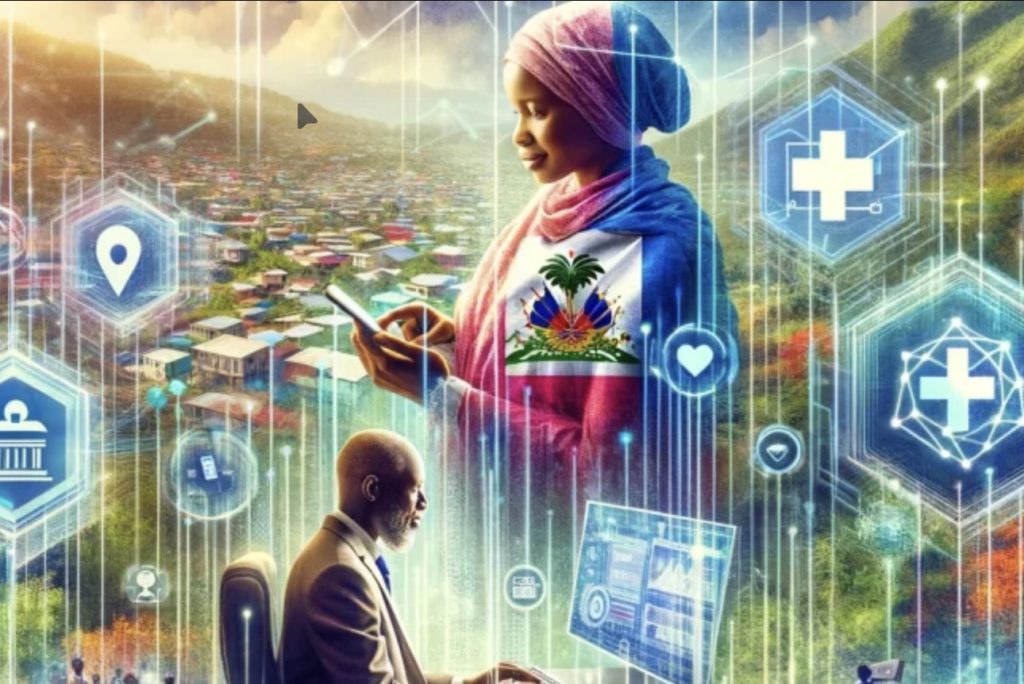
The Landscape
Haiti occupies a singular and sacred place in the Pan-African imagination. As the site of the only successful slave revolution in history and the first Black republic in the Western Hemisphere, Haiti is both a spiritual touchstone and a geopolitical case study in the consequences of Black sovereignty. The ongoing destabilization of Haiti, through imperial debt, structural adjustment, earthquake devastation, gang violence fueled by foreign arms, and international political interference, represents precisely the kind of distortion the IQTJ Codex framework identifies as the systematic dismantling of collective coherence.
In this context, digital transformation in Haiti is both urgently necessary and deeply fraught. Mobile penetration stands at approximately 70%, and Haitian communities have demonstrated remarkable organic adoption of digital tools, particularly mobile money (via Digicel's MonCash platform) and social media (WhatsApp and Facebook serve as primary news and communication infrastructure for millions). Yet broadband access remains critically low, concentrated in Port-au-Prince, and the institutional capacity for coordinated digital literacy is severely constrained by ongoing political instability.
Readiness Campaigns in Haiti
1. MonCash and Mobile Financial Inclusion
Digicel's MonCash mobile money platform has become the de facto financial infrastructure for millions of Haitians, particularly in the absence of functioning banking systems and during remittance flows from the Haitian diaspora in the United States, Canada, France, and the Dominican Republic. Over 4 million active users, the majority of whom are low-income and Afro-Haitian, represent a significant foundation for digital financial sovereignty. Building on this platform, organizations like the Haiti Community Foundation and Enstiti Teknoloji Haiti are developing digital entrepreneurship programs.
2. Lakou Kajou and Community Digital Media
Lakou Kajou is a Haitian Kreyòl-language digital media organization that has pioneered culturally sovereign digital communication. Broadcasting via YouTube, WhatsApp, and FM radio simultaneously, it demonstrates how community-controlled digital platforms can circumvent both state censorship and corporate media domination. This model represents a template for Pan-African digital communication sovereignty, anchored in language, culture, and community trust.
3. Hacks/Hackers Port-au-Prince and DigiLab Haiti
The Hacks/Hackers chapter in Port-au-Prince and DigiLab Haiti have worked to build a technology ecosystem in one of the world's most challenged environments. Running workshops in web development, data journalism, digital security, and civic technology, these organizations are cultivating a generation of Haitian technologists who are simultaneously culturally grounded and globally competitive.
4. Diaspora-Driven Digital Investment
The Haitian diaspora, estimated at over 1.5 million in the United States alone, with significant communities in Canada, France, the Bahamas, and Martinique, sends over $4 billion in annual remittances to Haiti. A growing movement within the diaspora is redirecting portions of this capital toward digital infrastructure investment: funding community WiFi networks, sponsoring coding academies, and building Kreyòl-language digital content. Organizations like the Haitian American Grassroots Coalition and various diasporic mutual aid societies are the connective tissue of this movement.
Critical Challenges
- Gang control of key Port-au-Prince neighborhoods has disrupted physical digital infrastructure, including fiber cables and tech hubs.
- Political instability following the assassination of President Moïse (2021) and the formation of the Presidential Transition Council has left digital policy in a state of suspension.
- Brain drain, Haiti's most digitally skilled professionals continue to emigrate, creating a compounding deficit of in-country technical capacity.
- The imposition of technology by international NGOs without community consultation frequently displaces indigenous solutions and creates dependency rather than sovereignty.
- French and English remain the languages of digital tools and platforms, sidelining the majority Kreyòl-speaking population from technology designed to serve them.
Digital transformation in Haiti must be led by Haitians. Every program, platform, and protocol imposed from outside that fails to center Kreyòl language, Vodou epistemology, and Haitian community governance structures perpetuates the very distortion it claims to address.
Part IV: Pan-African Digital Readiness - Cross-Cutting Themes
What Does Readiness Mean for Pan-African Communities?
Readiness is not a passive state of being prepared to receive technology. For Pan-African communities, readiness is an active, intentional, culturally-grounded process of building the individual and collective capacity to engage with, govern, own, and leverage digital systems. IQTJ's coherence framework identifies five dimensions of readiness:
- Individual Coherence: personal digital literacy, critical media literacy, and data sovereignty awareness.
- Relational Coherence: community networks that enable collective digital action, peer-to-peer learning, and mutual accountability.
- Economic Coherence: digital skills that translate into economic sovereignty, entrepreneurship, ownership of digital assets, access to global markets.
- Cultural Coherence: digital tools and platforms that affirm, preserve, and transmit African diaspora culture, language, and knowledge systems.
- Political Coherence: digital governance literacy, understanding how data, algorithms, and platform policies shape political realities, and building sovereign alternatives.
Common Barriers Across All Three Regions
Despite their geographic, linguistic, and historical differences, Brazil, the Caribbean, and Haiti share a set of structural barriers to Pan-African digital readiness:
- Infrastructure inequality: Broadband access, device ownership, and electricity reliability are all racialized and class-stratified.
- Linguistic marginalization: Digital tools are primarily built in English, Portuguese, Spanish, and French, rarely in Kreyòl, Patwa, or Afro-Brazilian vernacular languages.
- Corporate extraction: Social media platforms and e-commerce systems extract data and value from Black communities without returning resources to those communities.
- Algorithmic bias: AI and automated systems trained on non-African-diaspora data reproduce and amplify racial bias.
- Digital surveillance: Law enforcement use of facial recognition and predictive policing disproportionately targets Black communities.
- Financial exclusion: Digital finance tools often require formal banking relationships and state identification that many in diaspora communities do not possess.
Part V: A Vision for Community Investment - What We Must Build Together
The research presented in this blog makes one truth undeniable: the digital transformation currently unfolding across Brazil, the Caribbean, and Haiti will either be done to Pan-African communities - or by them. The difference between those two outcomes is not technology. It is investment, intention, and organized collective will.
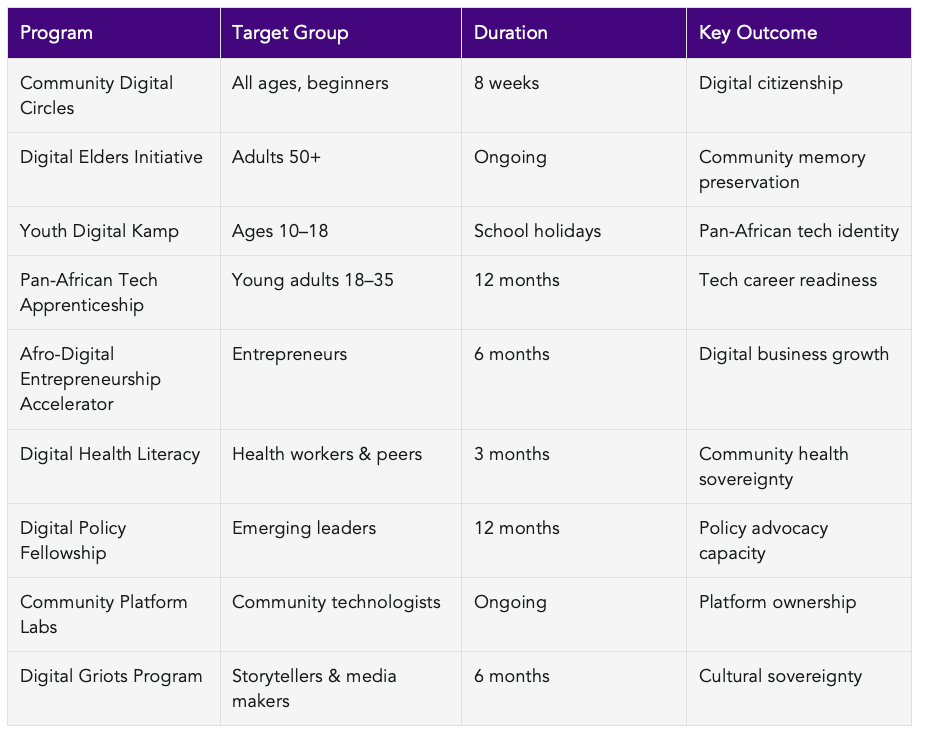
IQTJ has developed a framework of nine integrated programs across three tiers: Foundational Literacy, Applied Digital Skills, and Sovereign Leadership, designed to move Pan-African communities from digital recipients to digital sovereigns. These programs are not yet operational. They are a vision, grounded in deep community research and the IQTJ Codex framework of coherence over distortion. Bringing them to life requires the partnership of donors, institutions, diaspora investors, and volunteers who believe that digital sovereignty is inseparable from human dignity.
What follows is not a report on what IQTJ has built, it is an invitation to build it with us.
Tier 1: Foundational Digital Literacy Programs
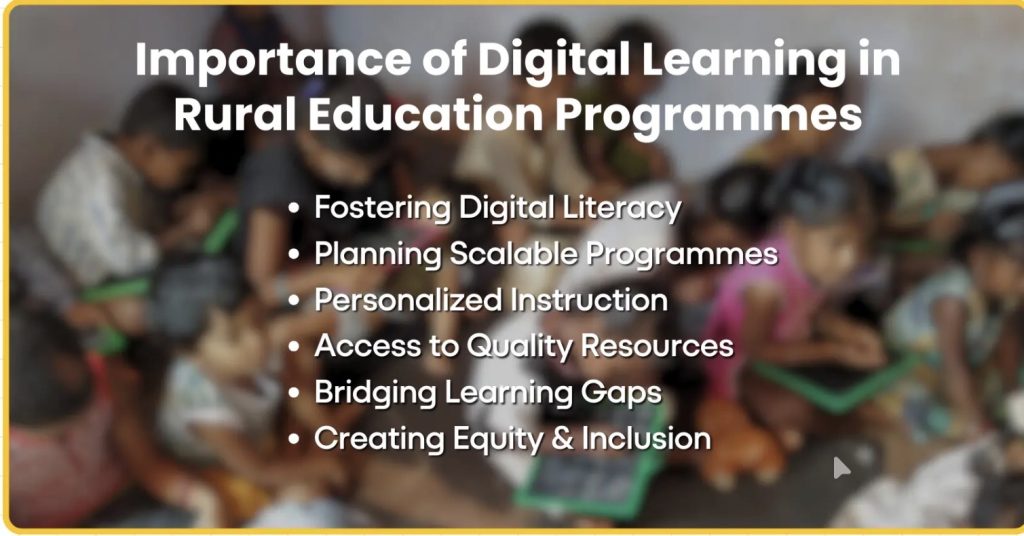
Foundational literacy is the base of the pyramid. Without it, higher-order capability cannot be built. These programs would serve community members who are new to digital tools or who use them passively without strategic awareness; elders, rural residents, young people in under-resourced schools, and returning citizens.
1. Community Digital Circles (CDC)
Modeled on the African tradition of community learning circles, CDCs would be facilitated small-group sessions held in trusted community spaces, community centers, churches, barbershops, hair salons, and cultural organizations. Facilitators, drawn from within communities, would guide participants through; basic device operation, safe internet navigation, digital communication, online safety and privacy, and critical media literacy (recognizing misinformation, surveillance, and algorithmic manipulation).
- Vision: 8-week cycles, 2 hours per week, in Kreyòl, Patwa, Yoruba-inflected Portuguese, and local vernaculars
- Investment needed: Facilitator stipends, device access, and community space partnerships
- Certification: IQTJ Digital Citizenship Certificate
2. Digital Elders Initiative
Older generations are often the most digitally excluded, and yet they hold the deepest cultural knowledge. This initiative envisions tailored one-on-one and small-group digital support for adults over 50, while simultaneously capturing their oral histories, traditional knowledge, and community wisdom into community-owned digital archives. The program would be bi-directional: elders learn devices; communities gain irreplaceable memory.
- Vision: Community-owned digital archives in local languages
- Investment needed: Device loans, archive infrastructure, and partnership with cultural organizations
3. Youth Digital Kamp (YDK)
Intensive school-holiday digital literacy camps for youth ages 10–18, blending skill-building with Pan-African history, identity, and culture. Young people would leave not only knowing how to use technology but understanding why digital sovereignty matters to their community's future, through gaming, digital art, coding basics, and community storytelling.
- Vision: Community sites in Bahia, Rio, Kingston, Port of Spain, and Port-au-Prince
- Investment needed: Camp facilitation, materials, devices, and young adult facilitator stipends
Tier 2: Applied Digital Skills Programs
Applied skills programs would build on foundational literacy to develop economically and professionally relevant digital competencies, creating pathways to livelihood, entrepreneurship, and economic sovereignty for young adults across the diaspora.
4. Pan-African Tech Apprenticeship Network (PATAN)
A proposed regional apprenticeship network connecting young Pan-African tech learners in Brazil, the Caribbean, and Haiti with diaspora tech professionals in the United States, Canada, and the United Kingdom. A 12-month blended learning program would cover web development, data literacy, digital marketing, UX/UI design, and cybersecurity, with mentorship from senior Pan-African professionals and placement support with Black-owned tech companies.
- Vision: 500 certified apprentices per year by Year 3
- Investment needed: Curriculum development, stipends for learners, and diaspora mentor coordination
5. Afro-Digital Entrepreneurship Accelerator (ADEA)
A business development program envisioned for Afro-descendant entrepreneurs seeking to build, scale, or transition into the digital economy, covering e-commerce, digital marketing, financial technology, and platform entrepreneurship, with seed grants and connections to Pan-African investor networks.
- Vision: Focus on agriculture tech, health tech, cultural industries, and education tech
- Investment needed: Seed grant capital, program management, and investor network development
6. Digital Health Literacy Modules
These modules would train community health workers and peer educators to use digital health tools, telehealth platforms, and health data advocacy skills, rooted in holistic African health frameworks, explicitly challenging biomedical surveillance and the extraction of data from Black bodies without community consent or benefit.
- Investment needed: Curriculum development, health worker stipends, and telehealth platform partnerships
Tier 3: Sovereign Leadership Programs
Sovereign leadership programs would develop the next generation of Pan-African digital policy advocates, platform builders, and community technology leaders, people equipped not merely to use digital systems, but to govern, own, and shape them.
7. Pan-African Digital Policy Fellowship
A fully-funded 12-month fellowship placing young Pan-African leaders from Brazil, the Caribbean, and Haiti within digital rights organizations, regulatory bodies, and technology policy institutes, building a cohort of community ambassadors equipped to shape national and regional digital policy in Pan-African interests.
- Vision: Partnerships with digital rights NGOs, the CARICOM secretariat, and Brazil's CGI.br
- Investment needed: Fellow stipends, travel, and institutional partnership development
8. Community Platform Labs
Physical and virtual spaces where community technologists would design, build, and govern digital platforms owned by and for their communities, including a Pan-African remittance cooperative, a digital marketplace for Afro-descendant artisans and entrepreneurs, a Kreyòl-language AI learning tool, and a community-governed diaspora organizing network.
- Vision: Platform co-ops governed by community member ownership
- Investment needed: Lab infrastructure, developer fellowships, and legal/governance support
9. Digital Griots Program
Drawing on the West African tradition of the griot, the cultural custodian of communal memory, this program would train community storytellers in digital media production: video documentary, podcast creation, digital archiving, and multimedia journalism. Digital Griots would produce culturally sovereign content that counters dominant narratives and builds collective Pan-African memory.
- Vision: Community documentary series, oral history archives, and digital cultural festivals
- Investment needed: Media equipment, production training, and distribution infrastructure
Program Vision at-a-Glance

Call to Action: Invest in Pan-African Digital Sovereignty
The programs outlined above are not hypothetical, they are the logical, necessary response to the conditions documented throughout this blog. They represent the difference between Pan-African communities being shaped by the digital revolution and Pan-African communities shaping it. IQTJ is committed to bringing this vision to life. But we cannot do it alone.
We are calling on donors, institutional funders, diaspora investors, technology organizations, and skilled volunteers to join us in making this work real. Every contribution, whether financial, professional, or relational, moves us one step closer to a digital world that serves African diaspora communities rather than extracting from them.
Ways to Support
Make a Financial Contribution
Your donation directly funds the design, piloting, and scaling of the nine programs in the IQTJ Digital Sovereignty framework. Every dollar invested is a commitment to the principle that digital access is not a privilege, it is a right, and a foundation of collective freedom.
- Individual donors: Support a Community Digital Circle in a favela, a quilombo, or a Caribbean community of your choosing.
- Major gifts: Fund an entire program tier, from Foundational Literacy to Sovereign Leadership, and name a generation of Pan-African digital leaders.
- Legacy giving: Include IQTJ in your estate planning and ensure that this work outlasts all of us.
To donate, please contact us at: info@iqtj.org
Become an Institutional or Corporate Partner
We invite foundations, universities, technology companies, and diaspora-serving institutions to enter into formal partnerships with IQTJ. Partnership opportunities include program co-design and co-funding, research collaboration, in-kind technology donations (devices, platforms, software licenses), and employee volunteer programs connecting tech professionals with Pan-African communities.
- Technology partners: Donate devices, internet access, cloud infrastructure, or software licenses that directly resource our programs.
- Foundation partners: Co-design grant-funded initiatives aligned with your impact priorities in education, equity, and economic development.
- University partners: Collaborate on research, curriculum development, and fellowship pipelines that center Pan-African digital sovereignty.
To explore partnership opportunities, contact: info@iqtj.org
Volunteer Your Expertise
If you are a technologist, educator, policy advocate, digital rights lawyer, media producer, community organizer, or simply someone who carries the skills these communities need, we want to hear from you. IQTJ's programs are designed to be community-facilitated, and the diaspora's global talent pool is one of our greatest assets.
- Tech professionals: Volunteer as a mentor in the Pan-African Tech Apprenticeship Network or contribute to Community Platform Lab development.
- Educators and curriculum designers: Help us build culturally grounded, multilingual digital literacy curricula for the Community Digital Circles and Youth Digital Kamp.
- Media makers and storytellers: Support the Digital Griots Program by training community documentarians and archivists.
- Legal and policy experts: Advise on digital rights, data governance, platform co-op law, and policy advocacy strategy.
- Community organizers: Help us identify, reach, and build trust with the communities in Brazil, the Caribbean, and Haiti who will benefit most from these programs.
To offer your skills and expertise, reach us at: info@iqtj.org
The communities documented in this blog are not waiting to be saved. They are already building. What they need are partners who match their urgency, honor their intelligence, and invest in their vision. IQTJ is the bridge. Will you walk it with us?

Conclusion: From Connectivity to Coherence
Digital transformation, as it has been delivered to the world's Black and brown communities, has too often served as a new vector of extraction, harvesting data, attention, and economic value while returning algorithmic surveillance, cultural displacement, and dependency. The Pan-African communities of Brazil, the Caribbean, and Haiti deserve, and are actively building, a different relationship with the digital world.
That relationship is grounded in the principle at the heart of IQTJ's mission: coherence. Not connectivity for its own sake, but digital integration that strengthens the capacity of communities to sustain themselves, govern themselves, know themselves, and build futures rooted in their own values and traditions.
The campaigns documented in this blog represent the emerging architecture of Pan-African digital resilience. The vision programs proposed in Part V represent the next chapter, one that will only be written if those who understand what is at stake choose to act. Community organizers in Salvador, tech workers in Kingston, digital storytellers in Port-au-Prince, and diaspora engineers in Toronto and London are all moving toward the same horizon: a digital world that is finally, fully, ours.
IQTJ exists to accelerate that movement. Join us.
Sovereignty is not granted. It is built, one line of code, one community circle, one archived story, one invested dollar at a time.