
They Borrowed Our Blueprint
The Susu, Collective Economics, and the Fight for Financial Sovereignty
Published by IQTJ | June 2026
“Before there were banks, there was trust. Before there were contracts, there was community. The Susu was never informal - it was foundational.”
Introduction: A System Before Systems
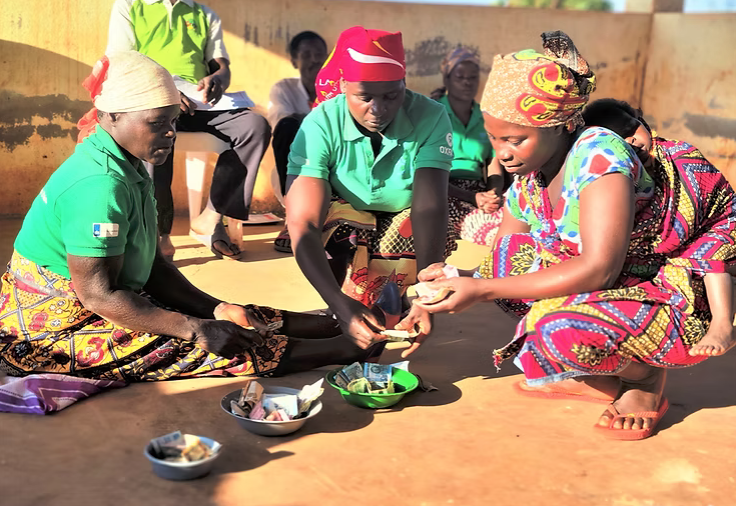
Across West Africa, the Caribbean, the American South, the United Kingdom, and beyond, a quiet revolution has been occurring for centuries, one that requires no central bank, no credit score, no collateral, and no intermediary. It is called the Susu. And for the communities that practice it, it is not a workaround. It is a blueprint.
The Susu, known as esusu in Nigeria, tontine across West Africa, pardner hand in Jamaica and the Eastern Caribbean, hagbad in the Somali diaspora, and by dozens of other names across the Pan-African world, is a rotating savings and credit association (ROSCA) built entirely on mutual trust and collective commitment. Members contribute a fixed amount to a shared pot on a regular schedule; each rotation, one member receives the full pot. No interest. No fees. No gatekeeping.
As fintech accelerates, as decentralized finance (DeFi) platforms attract billions in global capital, and as community-based wealth-building enters mainstream financial discourse, the Susu is having what some are calling a “moment.” But IQTJ is here to name what that moment actually is: a recognition, long overdue, that African people invented the infrastructure of collective finance long before Western institutions claimed it as innovation.
This is not nostalgia. This is genealogy. And genealogy, as the Codex framework reminds us, is the antidote to distortion.
Part I: Origins — Where the Blueprint Was Drawn
The Susu in West Africa: A Timeline Older Than Money Itself
To understand the true age of the Susu, we must first disentangle it from the assumption that it is a financial instrument, because it predates finance as the modern world defines it. The earliest forms of collective pooling in African communities were not monetary. They were material: shared labor, pooled harvests, coordinated resource allocation across households and kinship networks. These practices are documented as far back as 3000 BCE in the agricultural settlements of the Niger River Delta, where communal granary systems operated on rotational principles structurally identical to the Susu. Each household contributed a portion of their harvest to a collective store; each season, a designated household drew on the full reserve for investment, land clearance, seed acquisition, the building of new structures.
Coined money did not emerge in West Africa's major trading civilizations until approximately the 8th century CE, when trans-Saharan trade networks formalized exchange using gold dust, cowrie shells, and iron bars as currency standards. The Susu, in its communal labor and resource-pooling form, precedes this monetary era by at least three millennia. This means the architecture of collective savings, the foundational logic of trust-based, rotating contribution, was fully developed and socially embedded in African communities thousands of years before the concept of a coin or a note existed anywhere in the world.
By 1000 BCE, the Kingdom of Kush (in present-day Sudan and Ethiopia) and the early Sahelian civilizations had developed sophisticated barter-based collective systems for craftspeople, traders, and farmers. Artisan guilds pooled raw materials on rotating cycles; traders pooled transport and inventory costs across caravan seasons. These are the direct ancestors of what would become the esusu, the tontine, and the Susu. Between 300 CE and 1200 CE, during the height of the Ghana Empire, the rise of the Mali Empire, and the flourishing of trans-Saharan trade, the collective savings circle evolved into an explicitly financial instrument. With the formalization of gold dust and cowrie shell currencies in the Sahel and Gulf of Guinea regions, communal pooling adapted: members now contributed measured quantities of currency rather than labor or grain, and the pot was distributed in monetary form. Archaeological and documentary evidence from Arab scholars of the period, including the 11th-century geographer Al-Bakri, who documented economic life in the Ghana Empire, describes rotational savings associations among market traders in cities such as Koumbi Saleh and Timbuktu.
By the 14th century, during the reign of Mansa Musa and the apex of the Mali Empire, the esusu and its regional variants were documented across the breadth of West Africa's commercial networks, from the Hausa city-states of present-day northern Nigeria to the Akan gold markets of present-day Ghana. The tontine form, which European colonial scholars would later name after a 17th-century Italian-French financier named Lorenzo de Tonti, was in full operation across West Africa centuries before Tonti was born. The naming itself is a form of distortion, an act of epistemic dispossession that attributed African financial innovation to a European who observed and adapted it, rather than to the civilizations that invented it.
The precise origins of the Susu are ancient and geographically distributed, but historians and anthropologists trace its most fully articulated forms to West Africa, particularly among the Yoruba of present-day Nigeria, the Akan of Ghana, and the Fula and Mandinka peoples across the Sahel and Guinea Coast. Oral traditions and early ethnographic accounts place communal savings circles at the center of market economies, agricultural cycles, and family life well before the colonial era.
Among the Yoruba, the esusu was a sophisticated financial tool embedded in the social structure of the marketplace. Participation was organized by traders, market women, and artisans. The pot was large enough to fund a stall, purchase raw materials, or secure a family through seasons of difficulty. Crucially, the esusu was governed not by law but by honor, by the understood weight of reciprocal obligation in a society that measured standing by one’s reliability to community.
Among the Akan, the system known as susu or nsusu carried additional spiritual weight. The act of saving together was tied to concepts of communal destiny, what one might translate today as collective coherence. Your participation was not merely a financial transaction; it was an affirmation that you were part of something larger than your individual circumstances.
In this way, the Susu was never simply about money. It was about the architecture of sovereignty, the capacity of a community to hold its own resources, direct its own circulation of wealth, and protect its members from the volatility and exploitation of external systems.
What It Represented: Individual, Family, and Community Elevation
To understand the full scope of the Susu’s function, we must resist the modern tendency to reduce it to its mechanics. Yes, it is a savings circle. But what does savings actually represent in communities that have been systematically denied access to capital?
At the individual level, the Susu offered access to a lump sum that would otherwise take years to accumulate. A domestic worker could receive a pot large enough to fund a small business. A farmer could purchase equipment. A young person could pay school fees. The Susu transformed incremental savings into transformative capital, not through debt, but through solidarity.
At the family level, the Susu was often the mechanism through which intergenerational resources were transferred and protected. Parents participating in a Susu were not saving for themselves alone, they were modeling for their children what financial self-determination looked like from the inside out. This is coherence in practice: the alignment of individual action with collective aspiration.
At the community level, the Susu was infrastructure. Where banks refused to lend, where governments failed to invest, where predatory lenders circled, the Susu held the community’s economic floor. It was not a supplement to the formal economy, it was an alternative to the exclusion from it.
A Global Tradition: Jewish, Asian, and Other Collective Savings Cultures
The Susu does not stand alone as the only evidence of humanity's indigenous instinct toward collective financial solidarity. Across cultures and continents, communities developed strikingly similar architectures of mutual savings, each rooted in the same fundamental recognition that trust, more than capital, is the bedrock of economic resilience. These parallels do not dilute the African origin of the Susu; they confirm that collective savings is a universal human technology, one that African civilizations developed earlier and with greater sophistication than is commonly acknowledged.
In Jewish communities, the gemach (short for gemilut chasadim, meaning 'acts of loving kindness') represents one of the oldest documented forms of interest-free communal lending in the world. Rooted in the Torah commandment against charging interest to a fellow community member, most directly in Exodus 22:24, which instructs that when lending to the poor, one must not act as an overbearing creditor nor impose interest, the gemach system dates to at least the 5th century BCE in the Jewish communities of Babylon and Judea. Leviticus 25:35-37 extends this principle further, framing the obligation to support a struggling neighbor as inseparable from the refusal to profit from their difficulty. By the medieval period, Jewish communities across Europe, North Africa, and the Middle East had developed extensive gemach networks covering not only monetary loans but household goods, wedding supplies, medical equipment, and food. The gemach was not charity, it was structured mutual aid, governed by communal obligation and repayment expectation. The Talmudic codification of these lending practices between 200 CE and 500 CE represents one of the earliest written legal frameworks for interest-free community finance anywhere in the world.
In East and Southeast Asian communities, the hui (Chinese), tanomoshi or ko (Japanese), and kye (Korean) are the regional equivalents of the Susu, rotating savings and credit associations with documented histories stretching back over a thousand years. The Chinese hui is referenced in texts from the Song Dynasty (960–1279 CE), where it served merchants, craftspeople, and farmers across China's interior trade networks. The Japanese tanomoshi-ko, meaning 'mutual aid lecture,' was formalized during the Edo period (1603–1868) as a community savings instrument for farmers facing seasonal income volatility. The Korean kye, still widely practiced in Korean diaspora communities in the United States, Canada, and Australia today, operates on principles functionally identical to the Susu: fixed contributions, rotating pot, governed by social trust and peer accountability.
In South Asian communities, the chit fund is perhaps the most formally codified of these systems. Its documented origins in Kerala trace to the 18th century under Maharaja Rama Varma, who formalized the kuri system with lottery-style distributions in the 1700s, though community-based pooling practices in the region predate this formalization considerably. Historical records from 1887 describe British administrator William Logan documenting chit fund customs among friend groups in the Malabar district. The system was eventually incorporated into Indian national law through the Chit Funds Act, 1982 (No. 40 of 1982), making it one of the rare cases where an indigenous collective savings practice was formally recognized and regulated by a national government rather than displaced by formal banking. Chit funds today manage an estimated $50 billion annually in India alone.
What unites the Susu, the gemach, the hui, the kye, and the chit fund is not coincidence, it is a shared truth: that communities who were excluded from, exploited by, or skeptical of centralized financial institutions built their own. The Susu was first. Its descendants are everywhere. And the fintech industry's current discovery of rotating savings as an innovation is, in fact, a belated and commercially motivated recognition of what marginalized communities have always known.
Part II: Displacement and Diaspora — The Blueprint Travels
How the Susu Survived the Middle Passage
The transatlantic slave trade did not only transport bodies. It transported knowledge, culture, memory, and practice. Among the most durable of these survivals was the collective savings circle.
Historians including Melville J. Herskovits and, more recently, Karin Barber and Sidney Mintz have documented the remarkable continuity of West African economic practices in diaspora communities. Enslaved Africans in the Caribbean and the American South, stripped of nearly everything, retained the structural logic of the Susu and adapted it to conditions of brutal material deprivation.
In Jamaica, the pardner hand became the financial backbone of households in which formal banking was either inaccessible or actively hostile. Women, in particular, were the keepers of these circles, organizing, administering, and enforcing the social contracts that held them together. In Trinidad and Tobago, the sou-sou carried the same function. In Guyana, the box hand. In Barbados, the meeting turn. The names changed; the architecture did not.
In the United States, African American communities developed analogous systems under names like the “club” or the “pitch-in,” particularly in the Deep South and among Great Migration communities in Northern cities. These systems were, in many documented cases, the seed capital for Black-owned businesses, churches, funeral homes, and community organizations during and after the era of legal segregation.
This is not coincidence. This is ancestral technology, carried across oceans, reshaped by necessity, and preserved because it worked.
The Susu in the Modern Diaspora
Today, Susu-style circles are practiced across the Pan-African diaspora with a breadth and vitality that belies their “informality.” In the United Kingdom, West African and Caribbean communities maintain vibrant pardner and Susu networks through WhatsApp groups, spreadsheet management, and peer accountability systems. In New York, Atlanta, and Toronto, diaspora women, often first-generation immigrants, run circles managing tens of thousands of dollars per cycle.
Community finance researchers and diaspora financial institutions have consistently documented that informal savings circles in the United States collectively manage capital in the hundreds of millions of dollars annually, a figure that, while difficult to quantify precisely given the private and trust-based nature of these arrangements, reflects the breadth of participation across immigrant and diaspora communities. This capital circulates entirely outside formal financial institutions, generates no profit for banks, and builds wealth directly within the communities that create it.
This is not a gap in the financial system. This is a refusal of it.
Part III: Technology, Co-optation, and the Sovereignty Question
FinTech Discovers the ‘Savings Circle’
In the last decade, Silicon Valley and the global fintech industry have “discovered” the rotating savings circle. Platforms such as Esusu (U.S.), Oraan (Pakistan), StashAway (Southeast Asia), and various community finance apps have built venture-backed businesses on the structural logic of collective savings. Esusu, founded by Nigerian-American entrepreneurs Wemimo Abbey and Samir Goel, has raised over $200 million in funding and specifically serves diaspora and credit-invisible communities.
There is genuine good in this. When Esusu reports Susu participation to credit bureaus, it translates a previously “invisible” financial practice into credit history, a recognition, however mediated, that the system has always worked. When apps digitize the circle, they reduce the friction of coordination and expand access to people who might not have a Susu network near them.
But IQTJ names the tension plainly: there is a difference between technology that amplifies a community’s own infrastructure and technology that extracts the logic of that infrastructure, repackages it, and returns it to the community as a product to be purchased. One is sovereignty. The other is distortion with a friendly user interface.
The question is not whether fintech is good or bad. The question is: who owns the platform? Who captures the data? Who determines the terms? Who profits from the trust that communities have generated over generations?
“The Susu was never informal, it was unregulated. There is a profound difference. Informal implies improvised, incomplete, insufficient. Unregulated means free from extraction.”
Blockchain, DeFi, and the Next Frontier
The rise of blockchain technology and decentralized finance introduces another dimension to this conversation. On its surface, DeFi appears to offer exactly what the Susu has always represented: financial systems that operate peer-to-peer, without centralized intermediaries, governed by transparent rules enforced by code rather than authority.
Several projects are now explicitly building blockchain-based Susu and tontine infrastructure. Platforms on Ethereum, Solana, and Celo blockchains have created smart-contract-based savings circles that automate pot distribution, enforce contribution commitments, and allow participants to join circles globally without geographic proximity or prior relationship.
For diaspora communities with family spread across multiple continents, a Ghanaian worker in London whose sister is in Accra and whose cousin is in Toronto, blockchain-based Susu could represent a genuine expansion of financial sovereignty. The pot crosses borders without a Western Union fee. The commitment is enforced by code, not social pressure. The record is immutable and transparent.
Consider what that comparison actually means for the communities involved. Traditional international money transfer services, Western Union, MoneyGram, and their equivalents, impose a compounding series of barriers on the very people who need transfer access most. Senders and receivers are required to present government-issued photo identification, proof of address, and in many cases secondary documentation verifying the purpose of the transfer. For undocumented community members, refugees, stateless individuals, or those living in regions where formal identification systems have been disrupted by conflict or colonial administrative legacy, these requirements are not bureaucratic inconveniences, they are walls. Beyond identity requirements, transfer services impose waiting periods of 24 to 72 hours for standard transfers, during which funds are held, verified, and cleared through correspondent banking networks that themselves operate on colonial-era financial architectures. In emergency situations, a family medical crisis, a sudden housing need, a business opportunity with a narrow window, these delays carry real human cost. Fees, meanwhile, are crushing. According to the World Bank Remittance Prices Worldwide report (Q1 2025), the average cost of sending $200 to Sub-Saharan Africa is 8.78% of the transaction value, nearly double the global average of 6.49%. In three out of every four sub-Saharan corridors, costs exceed 10%, and six of the eight most expensive corridors in the world originate from this region. The World Bank has documented this disparity for decades; the corridors that serve the poorest communities carry the highest fees. A blockchain-based Susu built on a community-owned protocol dissolves each of these friction points simultaneously, transferring value peer-to-peer, in minutes, at near-zero marginal cost, governed by the community rather than an extractive intermediary.
But the same warnings apply. A DeFi Susu built on a platform controlled by venture capital, subject to regulatory capture, or dependent on volatile cryptocurrencies carries its own forms of distortion. The technology is not inherently liberating. The question of ownership, of the protocol, the data, the governance, remains paramount.
What Sovereignty-Centered Financial Technology Looks Like
IQTJ defines financial sovereignty as the capacity of a community to govern the creation, circulation, and preservation of its own wealth, on its own terms, through its own institutions, accountable to its own values.
Applied to the Susu and its technological evolution, sovereignty-centered financial technology would require several conditions. The platform must be community-governed, not investor-governed. Data generated by participants belongs to participants. Integration with formal credit and financial systems must be opt-in, not extractive. The economics of the platform must reinvest into the communities it serves, not extract profit from them. And critically: the lineage must be named. When a fintech company builds on the structural logic of the Susu, it must say so, not to satisfy academic citation norms, but because attribution is a form of justice.
This is what the Codex framework means by eliminating distortion: restoring the accurate genealogy of ideas, practices, and innovations to the people and cultures from whom they came.
Conclusion: Reclaiming the Blueprint
The Susu did not need fintech to validate it. It was valid for centuries before venture capital arrived. The communities that built it, carried it across oceans, rebuilt it in hostile conditions, and maintained it without recognition were not waiting for Silicon Valley to acknowledge their genius. They were practicing sovereignty.
But we are in a moment, a genuinely critical one, in which the formal economy is finally being forced to reckon with what collective, trust-based finance has always known: that community is the most durable financial instrument ever designed.
The question for this generation is whether we will allow that recognition to produce genuine elevation for the communities that built this knowledge, or whether we will permit yet another extraction, this time dressed in algorithmic clothing.
IQTJ stands for the former. Our work, across every program, every partnership, and every publication, is oriented toward the same north star the Susu has always pointed toward: self-determination, collective coherence, and the radical act of trusting each other enough to build something that lasts.
The blueprint was never lost. It was just waiting to be claimed.
References & Sources
The following sources informed and are cited within this article. IQTJ is committed to attribution as a practice of intellectual justice.
Historical & Scholarly Sources
Al-Bakri, Abu Ubayd. Kitab al-Masalik wa al-Mamalik (Book of Highways and of Kingdoms), c. 1068 CE. Primary documentation of trade and commercial life in the Ghana Empire, including Koumbi Saleh. Al-Bakri wrote from Al-Andalus based on traveler accounts; his work is among the most important surviving Arabic sources on medieval West Africa.
Herskovits, Melville J. The Myth of the Negro Past. Beacon Press, 1941. Foundational anthropological work documenting cultural continuity between West African societies and African diaspora communities, including economic practices such as the esusu.
Herskovits, Melville J. Economic Anthropology: A Study in Comparative Economics. W. W. Norton, 1952. Analysis of economic systems in non-Western societies, including collective savings and trade practices in African communities.
Logan, William. Malabar Manual. 1887. British colonial administrator's documentation of chit fund practices among communities in the Malabar district of present-day Kerala, India.
Scripture & Legal Texts
The Torah. Exodus 22:24 — primary commandment against charging interest within the community. Leviticus 25:35-37 — extended obligation to support a struggling neighbor without financial exploitation. Both verses are foundational to the gemach tradition.
The Babylonian Talmud, compiled c. 200–500 CE. Codifies the prohibition on interest-bearing loans and establishes the ethical and legal framework for interest-free communal lending (gemach).
Government of India. The Chit Funds Act, No. 40 of 1982. Enacted 19 August 1982. The national legislative framework formally recognizing and regulating chit funds as a legitimate savings institution. Available: indiacode.nic.in.
Financial Data & Reports
World Bank. Remittance Prices Worldwide, Issue Q1 2025. Washington, D.C.: World Bank Group. Documents average remittance costs by corridor; Sub-Saharan Africa average: 8.78% per $200 sent, versus global average of 6.49%. Available: remittanceprices.worldbank.org.
Esusu Financial. Series B Funding Round ($130 million, led by SoftBank Vision Fund 2), January 2022; Series C Funding Round ($50 million, led by Westbound Equity Partners), December 2025. Total capital raised: over $200 million. Co-founders: Wemimo Abbey and Samir Goel. esusurent.com.
Reference & Encyclopedia Sources
World History Encyclopedia. Ghana Empire. worldhistory.org/Ghana_Empire. Documents the political, commercial, and cultural organization of the Ghana Empire, including Al-Bakri's account of Koumbi Saleh.
Wikipedia. Rotating Savings and Credit Association. Documents the global history and regional variants of the ROSCA, including esusu, tontine, hui, kye, tanomoshi-ko, pardner hand, and chit fund.
Britannica. Lorenzo de Tonti. Documents that Lorenzo Tonti was a 17th-century Neapolitan banker who proposed a tontine loan scheme to Cardinal Mazarin in 1653 — centuries after African rotating savings circles had already been operating under the same structural logic.
Fordham Journal of Corporate and Financial Law. A Tontine before Lorenzo de Tonti's: The Lisbon Tontine Proposal of 1641. 2017. Demonstrates that tontine-style systems predate Tonti's formal proposal, further undermining the European-origin narrative.
My Jewish Learning / Chabad.org. The Gemach. Contextualizes the gemach within Jewish law and communal tradition, tracing its foundations to Torah and Talmudic obligation. myjewishlearning.com.